
AI Agents for Cloud Optimization: Hype vs. Reality
What's Real, What's Automation, What's Marketing, and What Actually Cuts Your Bill
Most "AI" cloud optimization tools aren't actually agents
If you've sat through a cloud vendor pitch lately, you've heard it: "Our AI platform for cloud optimization will autonomously rightsize your environment, find waste, and slash your bill — all while you sleep." Sometimes it's true. More often, it's automation with an LLM-powered chat interface bolted on top.
That's not necessarily a bad thing. Automation has been effectively cutting cloud bills for years. But the word "agentic" is doing a lot of work in 2026, and it pays to know which side of the line a vendor is actually on before signing a contract, especially as AI workloads themselves are now driving cloud waste back up. According to Flexera's 2026 State of the Cloud report, wasted IaaS and PaaS spend climbed to 29% last year, ending five straight years of decline. AI workloads are a big part of why.
So: what does an AI agent for cloud optimization actually do, where does it work, where does it fall apart, and how should you evaluate vendors without falling for the buzzword? Let's dig in.
Agent, assistant, copilot, or automation: the definitions matter
An AI agent is a system that takes a goal, plans the steps to reach it, picks tools as it goes, evaluates the results, and adapts without a human prompting each step.
Compare that to two things it gets confused with:
An AI assistant waits for you to ask. Every output is a response to a direct request. You decide what happens next. Most of the chat interfaces sitting on top of cloud cost dashboards today are assistants, not agents.
Automation runs predefined sequences when conditions are met. "If instance utilization < 5% for 14 days, send a notification" is automation. It doesn't reason; it follows rules.
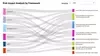
There's a useful framework for this called the Cloud Optimization Autonomy Spectrum by Sedai, with six levels running from manual operations (Level 1) through full autonomy (Level 6). Most production cloud cost tooling sits at Level 2–3 today: monitoring, alerts, and rule-based responses. True agentic behavior, where a system reasons through a multi-step problem on its own, is still rare in production cloud environments, even at vendors that market it that way.
The line is blurring, though. A tool that was rule-based automation 18 months ago can credibly call itself agentic today by adding an LLM reasoning layer on top of the same engine. The capability shift is meaningful, but marketing got a bit ahead of it.
Trends that put agentic AI on every FinOps radar in 2026
Three trends are colliding, and agentic AI sits at the intersection.
Manual cost optimization has hit diminishing returns. Talk to any FinOps team that's been at it for three or four years and you'll hear the same thing: the easy savings are gone. Orphaned volumes, oversized dev instances, untagged resources — those got captured years ago. What's left is a long tail of small, complex optimizations where the cost of investigating each opportunity often exceeds the savings.
AI workloads are creating new cost surfaces. Token pricing, GPU instance volatility, model inference scaling, and vector database storage don't behave like traditional cloud costs and don't respond to traditional optimization playbooks. The FinOps Foundation's 2026 State of FinOps report found that 98% of FinOps practices now manage some form of AI spend, and "FinOps for AI" is the number-one forward-looking priority for the year. These workloads need new approaches: token budget enforcement, model routing strategies, inference caching, and cost attribution by model or use case. Traditional rightsizing tools weren't built for this.
Agents themselves are creating runaway bills. This one's ironic but important. AI agents that hit recursive loops can burn through tens of thousands of dollars in token costs overnight. One widely cited incident saw four agents stuck in an 11-day loop that ran up $47,000 in API charges. The FinOps Foundation now tracks "agentic resource exhaustion" as a recognized failure mode.
The promise of agentic cloud optimization is handling high-volume, low-individual-value optimization decisions at machine speed, and applying investigative reasoning to AI cost anomalies the way a senior engineer would. That promise is still being delivered. In the meantime, tools that combine solid automation with AI assistance handle these tasks pretty efficiently and with far lower risk.
Three things agentic tools are doing in production right now
Strip away the sales pitches and the same three patterns keep showing up. However, notice that these 3 common "agentic" workflows still require a human-in-the-loop for final approval.
Autonomous waste discovery
A traditional cost tool flags an underutilized RDS cluster. An agentic system finds the cluster, looks at its tags to identify the owner, queries Jira to see if a ticket already exists, creates one if not, assigns it, and follows up if the ticket sits stale. Practitioners reporting to the FinOps Foundation describe initial-investigation time dropping from roughly 15 minutes per ticket to effectively zero.
Anomaly investigation with root cause
Traditional anomaly detection alerts you that S3 spend spiked. An agent investigates by pulling deployment history, correlates with code changes, checks request logs, identifies a recently merged feature that's writing oversized log objects, and produces a draft fix. This is primarily an enterprise-level capability today, with limited tooling available at scale.
Pre-deployment cost guardrails ("shift-left" FinOps)
This is the most strategically interesting one. An agent reviews proposed Terraform or CloudFormation changes during PR review, flags expensive patterns (oversized instance classes, missing autoscaling, no lifecycle policies on new buckets), and suggests cheaper alternatives before the resource exists and starts billing. It prevents waste rather than catching it after the fact.
Each of these cases involves multi-step reasoning, dynamic tool selection across systems like Jira, deployment logs, and IaC repos, and decisions that genuinely couldn't be hard-coded. That's where "agentic" earns its name... but where human still intercept for approval and even implementation.
Why most teams run agents in "review and approve" mode (hint: it’s safer)
A lot of what gets sold as agentic AI for cloud cost optimization is actually doing one of two things:
Wrapping an LLM around existing automation so users can ask "why did our spend go up last week?" and get a natural-language answer. That's a genuine UX improvement, but the underlying optimization is still the same rule-based engine. Useful, but not agentic.
Doing autonomous things in narrow, well-defined domains — like ProsperOps' algorithmic discount management — that look agentic but are really sophisticated mathematical optimization. Often excellent, but not what most people picture when they hear "AI agent."
There's also a deployment reality check that most vendors will confirm if you ask directly. Enterprise customers running "agentic" cost tools typically run them in copilot mode (review and approve every action) rather than autopilot (full autonomy). The reason is straightforward: a misfiring agent that terminates production capacity or deletes the wrong S3 bucket is a much bigger problem than any savings it generated. This is why safety architecture is not a secondary feature — it's the thing that determines whether any of this is deployable.
The questions to ask any vendor before granting action authority:
- What is the agent's blast-radius limit?
- Does it have a hard stop, or just an alert?
- Can actions be rolled back, and how?
- Is there an audit trail attributable to the agent specifically?
- What happens when the agent encounters ambiguity — does it ask, skip, or decide?
A vendor that can't give crisp answers to those questions isn't ready to be trusted with autonomous access to your infrastructure.
Finally, there's the cost of the agent itself. LLM inference isn't free. An agent that investigates 200 cost anomalies a day at a few thousand tokens per investigation can consume non-trivial token spend. If a vendor can't tell you what their agent costs to run, that's a question worth pressing. For lean teams and SMBs, the math is especially worth doing: a significant platform fee plus ongoing inference costs to optimize an AWS bill that's already relatively contained can easily erase the savings you were hoping for.
A vendor comparison by category
Here's a snapshot of who's doing what, organized by what their cost optimization features actually are rather than what they're marketed as. One thing worth keeping in mind as you scan this: the further right you move on the autonomy spectrum, the more internal infrastructure you need to use these tools safely: dedicated FinOps staff, mature tagging and ownership practices, SRE coverage to catch mistakes. For lean teams, that overhead often costs more than the tool saves.
Recommendation engines (assistive AI) surface insights; humans take action. Not agentic, but the free-tier options here are good at catching obvious waste.
- AWS Compute Optimizer — free rightsizing recommendations for EC2, EBS, Lambda, and ECS
- Microsoft Azure Advisor — free cost, reliability, and performance recommendations
- Google Cloud Recommender — free rightsizing and idle resource cleanup
- IBM Cloudability — enterprise FinOps reporting and allocation; priced for enterprise
Sophisticated automation (often with AI assistants) acts within a more narrow or predefined domain. It's worth doing your homework to understand if these tools fit your needs, are purpose-built for specific use cases, or designed for large-scale environments.
- Kalos — continuous AWS cost and security monitoring, AI-assisted recommendations, 1-click implementation, and configurable rules. Built for lean teams that need results without a dedicated FinOps function
- ProsperOps — autonomous RI/Savings Plan management; strong for high-spend AWS accounts with stable workloads
- CAST AI — Kubernetes-focused node and Spot optimization; requires Kubernetes at meaningful scale
- Harness Cloud Cost Management — rightsizing and scheduling; part of a broader enterprise platform
- IBM Turbonomic — hybrid and multi-cloud resource optimization; enterprise implementation complexity
- VMware Aria — multi-cloud policy workflows; primarily relevant for VMware-heavy environments
Genuinely agentic (LLM-driven reasoning + autonomous action) — these tools plan multi-step workflows and remediate autonomously. Operational maturity is also required to deploy them safely. Most are priced and scoped for mid-market to enterprise.
- Sedai — reinforcement-learning platform with dedicated cost, performance, and safety agents; three operating modes including full autopilot
- Vantage FinOps Agent — Slack-native LLM agent for cost investigation and remediation with approval gates
- Datadog Bits AI / Agent Builder — multi-agent workflows for SRE, dev, and security teams already on Datadog
- Microsoft Azure Copilot — agentic operations across Azure migration, deployment, and optimization
- Flexera — agentic FinOps for complex AI workloads (Snowflake, Databricks) post-acquisition of ProsperOps and Chaos Genius
If you're evaluating any of these, ask one question: "When the system finds a problem, what does it do without me?" That answer tells you which category you'd really need and whether your team is set up to support it.
If you're a lean team, full autonomy probably isn't what you need yet. Here's what actually helps.
Most of the agentic tools in the vendor landscape above were designed for organizations with dedicated FinOps teams, SRE coverage, and the internal bandwidth to configure, monitor, and course-correct autonomous agents. That's just a segment of the market, not most AWS customers.
The majority of teams running AWS are lean: an engineering team of five to twenty people where cloud cost management is someone's third or fourth job, not their first. Those teams don't need a multi-agent reasoning system. They need to stop paying for things they're not using, catch expensive mistakes before they compound, and do both without adding a new tool with its own maintenance burden.
The tooling options typically leave a gap for small teams. Free tools like AWS Compute Optimizer surface the obvious recommendations but leave all execution to you. Agentic platforms automate execution but require operational maturity, enterprise-level budget, and ongoing oversight most lean teams can't staff. Kalos sits between those two: it closes the execution gap on cost (and security) recommendations without requiring a dedicated person to run it.
Kalos is built for lean engineering teams. It gives you continuous visibility into what's running, what's idle, and what's costing more than it should, along with AI-assisted recommendations you can act on in one click and configurable rules that handle the recurring stuff automatically. Setup takes minutes, not weeks. There's no professional services engagement required to get value out of it. And unlike the agentic platforms that ask you to grant broad autonomous access before you've built the trust to justify it, Kalos keeps humans in the loop by default while making it genuinely easy to act.
If you're planning to adopt more autonomous tooling later, consider that to deploy agentic tools safely, you'll already need to have clean tagging, documented resource ownership, and clear cost baselines. (Where as Kalos works with your environment as it stands today and helps you improve your posture in the future.)
Five things to verify before you buy or try any agentic tool
- Ask what the system does without you. "Nothing, it shows me a dashboard" is a recommendation engine. "One predefined action when a rule fires" is automation. "Plans, decides, adapts, picks tools" is agentic. All three are useful, but only pay for the one you need.
- Ask about guardrails. Any vendor selling autonomous remediation should have clear answers on approval gates, rollback mechanisms, blast-radius limits, and audit trails. If they don't, that's the answer.
- Ask what the agent costs to run. LLM-powered agents consume tokens. A vendor that can't tell you what their agent's monthly compute cost looks like at your scale either hasn't measured it or doesn't want you measuring it. Or, ensure the AI assistant is already included in the cost.
- Pilot in recommendation mode first. Sedai's Datapilot, Vantage's read-only mode, Datadog's investigation-without-remediation — every credible vendor offers a way to evaluate recommendations before granting action authority. Use it.
- Don't pay an agentic premium for capabilities you already have or for scale you haven't reached. AWS Compute Optimizer is free. Azure Advisor is free. Google Cloud Recommender is free. They're not agentic, but they handle the obvious recommendations well. The paid layer above them is worth it only if it's solving a problem those tools don't — and for most lean teams, the gap is execution and visibility, not autonomous reasoning. That's a different product category at a very different price point.
The practical move in 2026
The agentic AI moment in cloud optimization is moving fast. Some tools marketed as agentic genuinely are, while thers are sophisticated automation with a chat interface, which is fine, but you shouldn't pay an agentic premium for it. Agentic systems also introduce new AI cost management problems of their own.
For most teams, the practical move is to get solid automated visibility and controls in place first, pilot agentic tools in recommend-only or human-in-the-loop mode where they show clear ROI, and stay skeptical of marketing rebrands. Ask vendors what their system actually does without you.
That's the honest version. It's less exciting than "AI agents will revolutionize your cloud bill," but it'll save you more money.
If you're running AWS without a dedicated team, Kalos is built for you. Continuous cost and security monitoring, AI-assisted recommendations, 1-click implementation, and safe automations — no professional services, no contract required. Start a free trial or book a demo to see what you can save in AWS waste, time, and resources.
FAQs
Usually, yes, though many vendors blur this. A chatbot answers questions; an agent takes goal-directed action across multiple systems without being prompted for each step. The clearest test is to ask, does the system do anything when you're not watching it? If yes, it's at least partly agentic. If it only responds when you ask, it's an assistant.
FinOps automation executes predefined rules when conditions are met, ex. schedule this instance to stop at 7pm, alert when spend exceeds a threshold, flag untagged resources. An AI agent reasons through problems dynamically, selects tools, and adapts its approach based on what it finds. The distinction is that automation handles the cases you anticipated, whereas an agent can handle cases you didn't.
Not in any honest reading of where the technology is today. What it will do is absorb high-volume, low-individual-value tasks like anomaly triage, ticket creation, rightsizing recommendations. Tools can free FinOps practitioners for the work that moves the needle: architecture decisions, commitment portfolio management, organizational accountability, and AI cost governance.
They're different categories built for different size teams. Sedai and Vantage are agentic optimization platforms designed for organizations that have the operational maturity to run autonomous agents safely. Kalos is built for lean engineering teams and SMBs that need consolidated AWS visibility, automated cost and security recommendations, and fast implementation without a dedicated function. If your priority is autonomous remediation across compute and Kubernetes at scale, look at Sedai or CAST AI. If your priority is getting control over your AWS spend without adding headcount, look at Kalos.
Recursive loops or runaway agents — well-documented in 2026; mitigate with hard token and budget caps, not just alerts.
Blast-radius incidents, where an agent terminates the wrong resource because of an ambiguous policy; the best agentic tools address this architecturally, with a dedicated safety layer that can block other agents rather than relying on thresholds alone.
Accountability gaps — when an agent makes a decision and something breaks, who owns it? Strong RBAC, approval gates, and audit logging attributable to the agent specifically are non-negotiable.
A practical checklist:
- Do we have consistent tagging?
- Documented ownership for every workload?
- Existing automated rules for the obvious waste (idle instances, unattached volumes)?
- An audit trail for cloud actions?
If most of those answers are no, you're not ready (and don't waste the budget).
Instead, Kalos automically analyzes spend and usage, categorizes your resources, then recommends actions you can implement with 1-click.
Sources
- Flexera. 2026 State of the Cloud Report. https://info.flexera.com/CM-REPORT-State-of-the-Cloud
- FinOps Foundation. State of FinOps 2026. https://data.finops.org
- Sedai. Cloud Optimization Autonomy Spectrum. https://www.sedai.io
- The $47,000 recursive agent incident (Hacker News / widely cited, May 2025). Original report: https://news.ycombinator.com/item?id=43988871
https://pub.towardsai.net/we-spent-47-000-running-ai-agents-in-production-heres-what-nobody-tells-you-about-a2a-and-mcp-5f845848de33 - FinOps Foundation. Agentic Resource Exhaustion — Recognized Failure Modes. https://www.finops.org
Further Reading
AI Cost Management: 12 Practices to Control Cloud Spend as AI Workloads Scale
Controls for tokens, GPUs, model routing, and runaway AI spend.
AWS Cost Management for SMBs: Here's What Nobody Tells You
Why cost optimization takes more data, time, and context than quick-win lists suggest.