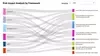

10 Organizational Barriers That Stop Companies from Acting on Cloud Cost or Security Recommendations
Many organizations struggle to implement cloud cost and security recommendations despite knowing they need improvement. Industry experts have identified ten organizational barriers that consistently prevent companies from taking action on critical recommendations. Understanding these obstacles is the first step toward building more responsive and secure cloud operations.
To get past the surface-level explanations, we asked ten cloud, security, and operations leaders to share the organizational barrier they see most often, and what it takes to move past those hurdles. Each perspective below comes from someone working inside these problems every day.
- Missing Ownership Prevents Remediation
- Tool Procurement Outpaces Capacity
- Unclear Priorities Sideline Risk Reduction
- Weak Translation And Fragmentation Hinder Progress
- Single Holdout Undermines Safeguards
- Misaligned Incentives Deter Maintenance Work
- Poor Data Erodes Leader Trust
- Insufficient Visibility Stalls Decisions
- Change Resistance Derails Implementation
- Legacy Processes Choke Modern Operations
Missing Ownership Prevents Remediation
The most common barrier is knowing what to fix and still not fixing it. That gap between recommendation and action is where cost and security improvements go to die in most organizations.
The cause is almost always the same: there's no clear owner for the work. A cloud cost report lands in someone's inbox, gets circulated, maybe generates a ticket — and then sits there while everyone stays focused on feature delivery. Security findings follow the same pattern. The team that identified the risk isn't the same team with the authority or capacity to remediate it, and without someone explicitly accountable for the outcome, the recommendation stays a recommendation.
We see this most often at the SMB level, where cloud and security responsibilities get distributed informally across teams that are already stretched. The fix isn't more tooling — better visibility isn't the bottleneck. It's assigning an owner, defining what "done" looks like, and protecting time in the sprint to actually do the work. Visibility without ownership is just a longer list of problems you're not solving.
Oscar Moncada, Co-founder and CEO, Kalos by Stratus10
Tool Procurement Outpaces Capacity
The most common barrier I see is a gap between procurement and operational capacity: organizations accept cloud cost or security recommendations but lack staffing, clear ownership, or procedures to carry them out. In my analysis of the St. Paul breach I observed that tools are often procured via grants while staffing and processes to operate them lag behind. That disconnect leaves recommendations unimplemented and creates patch and configuration debt, limited logging, and fragile backups. The practical response is to attach ownership, training, and runbooks to any new tool or recommendation, or to adopt co-managed services so someone is accountable for execution.
Edith Forestal, Founder & Cybersecurity Specialist, Forestal Security
Unclear Priorities Sideline Risk Reduction
The biggest barrier is competing priority signals. Most teams already know what needs fixing, the recommendations are sitting in dashboards, audit reports, and Slack threads. The problem is that nobody has clearly told engineers and product managers whether this quarter's real priority is shipping the new feature, hitting the growth target, or closing the security gap.
When that clarity is missing, people default to the work that feels most rewarding. Building something new is visible, demo-able, and career-enhancing. Reworking an IAM policy, tightening a storage bucket configuration, or refactoring a legacy integration to meet current security standards is none of those things. It's essential, but it isn't glamorous, and in many organisations, it isn't celebrated either.
The fix isn't more tooling or more reports. It's leadership explicitly ranking security and cost hygiene alongside product delivery, and making that ranking real through sprint commitments, promotion criteria, and how teams are recognised. Until hardening work carries the same organisational weight as shipping work, the recommendations will keep piling up.
Iain Hamilton, CEO, SolasOS
Weak Translation And Fragmentation Hinder Progress
It usually comes down to two things.
First is how the recommendation is communicated. A lot of security and cost findings are technically correct but poorly translated. If the business impact and the cost of doing nothing aren't clear, it gets deprioritized. I see this a lot with end-of-life systems running critical functions. A vulnerability gets disclosed, the vendor has no obligation to patch it, and now the company is exposed. But instead of being framed as a business risk with a timeline, it gets presented as just another technical issue, so it sits.
Second is fragmentation. Most recommendations are delivered as standalone items. When you hand a manager a list of 30 disconnected issues, it's overwhelming and hard to act on. There's no clear path forward.
What works better is grouping related issues into a program. If you can show how a set of actions reduces multiple risks, improves visibility, and creates something scalable with ongoing monitoring and reporting, it becomes much easier for leadership to justify and prioritize. You're not asking them to fix problems one by one, you're giving them a way to move the organization forward in a structured way.
AJ Debole, Field Chief Information Security Officer (CISO)
Single Holdout Undermines Safeguards
The most common barrier is not budget or executive buy-in. It is the one person on the team who refuses to comply with the recommendation because they find it inconvenient.
We see this constantly with security recommendations, especially around access control. A company can have a perfect 2FA policy on paper, with the IT team enforcing it, leadership backing it, and the rest of the staff cooperating. But if one person digs in and says they cannot remember complex passwords, or their phone does not get the texts, or they simply do not want another piece of software to manage, that single account becomes the entire weak point. The whole organization is only as secure as that holdout.
I get frustrated emails almost every week from end users who hate the credentials we assign. Strong passwords, mixed case, special characters, no real words, no reuse. The complaints are always the same. I cannot remember this. This is too hard. When I bring up password managers, the response is usually that they do not want to learn another tool. So they create workarounds. They write the password on a sticky note. They use a slight variation of an old password they already know. They share credentials with a coworker who will deal with it. Every workaround is another open door.
The recommendations are not the problem. The recommendations are usually correct. The barrier is that organizations underestimate how much resistance one inconvenienced person can generate, and how much damage that one person can absorb on behalf of everyone else's good behavior.
Shane Larrabee, President/Founder, FatLab Web Support
Misaligned Incentives Deter Maintenance Work
The organizational barrier that most often prevents companies from acting on cloud cost or security recommendations they already have is not budget. It is not technical capability. It is not even leadership awareness. The barrier is that the people who can act on the recommendations are not the same people who feel the consequences of not acting, and that disconnect is structural in most companies in a way that no amount of dashboards or quarterly reviews can fix.
Here is the pattern that plays out repeatedly across companies of different sizes and industries.
A cloud cost optimization audit gets run. The findings are clear.
There are unused reserved instances, oversized compute, idle storage, redundant data transfer patterns, and a dozen other categories of waste that together represent a meaningful annual savings opportunity. The report goes to the engineering team. They acknowledge the findings. They agree with the recommendations. Then nothing happens, or what happens is partial and slow, and the next audit six months later surfaces most of the same issues again.
A security audit follows the same pattern. The findings identify real risks. The recommendations are reasonable. Leadership reviews the report. Everyone agrees the issues need to be addressed. The remediation work gets prioritized into the next quarter and somehow keeps slipping into the quarter after that. By the time a real incident forces the hand, the original recommendations have been sitting in a document for eighteen months.
The reason this happens is not incompetence or indifference. It is incentive structure.
The engineering team that would have to do the work to implement the recommendations is judged on shipping features, hitting product deadlines, and supporting the business priorities that the rest of the company can see. Cloud cost optimization and security remediation are invisible work. They do not appear on a roadmap. They do not get celebrated in a launch announcement. They do not produce a demo. The engineer who spends two weeks rightsizing infrastructure or implementing missing security controls produces no visible output, while their teammate who shipped a customer-facing feature in the same time gets visibly recognized.
Worse, the consequences of not doing the work are diffuse and delayed. The cloud bill being 40 percent higher than necessary does not show up as a problem on any individual engineer's performance review.
Abdullah Mahmud, CEO, SEOSkit
Poor Data Erodes Leader Trust
The single most common organizational barrier is poor data quality and fragmented systems that prevent teams from seeing a unified, reliable picture. When recommendations are based on incomplete or inconsistent data, leaders and procurement teams are reluctant to act because they cannot trust the findings. Siloed systems across finance, procurement, and engineering create multiple versions of the truth and obscure the true cost and security posture. In my experience, that fragmentation is what most often stalls action even when recommendations exist. Leaders can overcome the barrier by investing in governance, standardization, and AI-driven analytics to transform raw data into actionable insight. Establishing clear data standards and a single source of truth enables teams to trust recommendations and move quickly to implement them.
Amir Husen, Content Writer, SEO Specialist & Associate, ICS Legal
Insufficient Visibility Stalls Decisions
From my work at Jeskell Systems, the single organizational barrier I see most often is a lack of insight and observability into actual cloud usage. When teams cannot clearly see who is using what and when, they default to overprovisioning rather than implementing cost or security recommendations. That lack of visibility breeds risk aversion and prevents decision makers from confidently acting on proposed changes. Improving monitoring and clarity around usage is essential to unlock those recommendations and reduce waste.
Change Resistance Derails Implementation
Honestly, the tech part is easy. The hard part is getting people to change. At Magic Hour, we gave great cloud recommendations, but if the team didn't see what was in it for them, they wouldn't adopt it.
It comes down to communication. Don't talk about "expected outcomes." Show them how it'll save them time or headaches. Make the benefit real in their daily work.
Runbo Li, CEO, Magic Hour
Legacy Processes Choke Modern Operations
One barrier I see quite often is organisations trying to carry over legacy IT processes into cloud environments.
In many cases, the recommendations are already there, whether it's around cost control or security, but the way decisions are made internally hasn't kept up. Approval processes, change controls and ownership structures are often built for slower, on-premise environments. When those same processes are applied to cloud, they tend to slow things down or get worked around altogether.
That's where things start to break down. Teams find ways to keep moving, but it leads to inconsistent controls, gaps in visibility and missed opportunities to manage cost properly.
What works better is rethinking how governance is applied in the first place. Simplifying approvals, being clear on ownership and building controls into day-to-day workflows makes a noticeable difference. Once the process reflects how the environment actually operates, it becomes much easier to act on the recommendations that are already in front of you.
Heather Bienefelt, Director, ICS Consulting
Conclusion: Fix the Execution Bottleneck
The common thread across all ten perspectives is not a lack of insight, but rather the gap between knowing and doing. Most organizations already have the dashboards, audit reports, and recommendations sitting in front of them. What stalls action is structural: undefined ownership, misaligned incentives that reward shipping over hardening, fragmented data that erodes leadership trust, legacy approval processes that don't fit cloud environments, a single inconvenienced holdout who can undermine an entire control. Add weak business translation, change resistance, and tools procured faster than teams can operate them, and the picture becomes clear: recommendations fail to get implemented because no one is positioned, equipped, or properly incentivized to execute them.
Closing that gap requires operational discipline: clear owners, sprint-protected time for hardening work, governance built into day-to-day workflows, and a single source of truth that decision-makers can act on with confidence. When those pieces are in place, cost and security optimization stop being a backlog item and starting becoming part of how the business runs.
Close the Execution Gap with Kalos
Beyond cloud visibility, Kalos empowers teams to move fast and efficiently with 1-click fixes that stop cloud spend leak and remediate security risks, all without adding headcount or sprint overhead. Instead of another dashboard that surfaces problems, Kalos analyzes the issue, recommends the fix, and then lets you fix it in a single click.
If your team is buried in cloud reports and short on capacity to act on them, Kalos was built for you.
Further Reading
Vulnerability Remediation for Cloud Compliance
How security teams assign ownership, deadlines, and evidence to findings.
How Cloud Cost Optimization Strategy Should Differ for Small vs. Large Companies
How cost control challenges shift as companies and AWS environments grow.