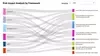

How Cloud Cost Optimization Strategy Should Differ for Small vs. Large Companies
Key Takeaways
- The technical levers for cutting cloud spend are the same at any company size. What changes is the operating model: small teams have a visibility problem, large organizations have a governance problem.
- At 50 people, one engineer with billing access can capture 60–80% of available savings. At 5,000 people, no single engineer can see the full bill. Optimization requires ownership models, chargeback, and a dedicated FinOps function.
- The mistake both sizes make is treating cloud cost as a finance problem to revisit quarterly. It's an architecture problem that has to be built into how teams work from day one.
Same Tactics, Different Execution Problems
The core cloud cost optimization tactics are largely the same at any company size: right-size your instances, eliminate idle resources, use reserved capacity where you can predict load. What changes between a 50-person company and a 5,000-person company is not primarily the technical playbook; it is the organizational challenge of executing it.
Small teams waste cloud spend because no one is paying close attention yet. Large organizations waste it because too many teams are making independent decisions without shared accountability. Solving a visibility problem requires different tools and habits than solving a governance problem, and applying an enterprise FinOps framework to a 50-person team often costs more in overhead than it saves.
We asked 13 practitioners, including founders, CTOs, and operations leaders, how cloud cost strategy needs to shift as organizations scale. Their answers cluster around a consistent thesis: visibility first at small scale, cloud cost governance at large scale:
- Start With Hygiene; Scale With Portfolio Governance
- Complexity Demands New Visibility and Tools
- Quarterly Cleanups Work; Structural Controls Rule Enterprises
- Decisions Drive Small Savings; Accountability Powers Enterprises
- Small Firms Need Visibility; Enterprises Require Governance
- Cost Shifts From Engineering to Governance
- Architecture Solves Small; Governance Solves Enterprise Costs
- Prioritize Visibility, Then Orchestrate Enterprise Coordination
- Optimize Predictability Small; Manage Variance at Scale
- Block Bad Bots to Slash Cloud Bills
- Habits Win Early; Governance Wins at Scale
- Make One Owner; Expand Governance With Scale
- Catch Early Missteps; Industrialize Platform Economics
Start With Hygiene; Scale With Portfolio Governance
The same cost levers exist at both scales, but the strategy applied is radically different. Here is what each profile should actually look like.
At 50 people: aggressive hygiene plus managed services. 30 to 50% of savings sit in basic hygiene: oversized instances, dev/test running 24/7, orphaned volumes, forgotten snapshots, idle load balancers. These big rocks dominate the bill.
Architecture biases toward managed and serverless. The premium over self-managed is almost always cheaper than the engineering time required to run the alternative. Commitments stay opportunistic (1-year only, stable workloads, never 3-year). Spot is used only for obvious batch jobs (CI, data pipelines). Storage lifecycle rules are enabled once and forgotten. Egress is too small to bother with.
A tagging convention plus the native cost dashboard covers visibility. No FinOps headcount, no dedicated tooling, no chargeback. Reviews are ad-hoc, triggered when the bill spikes, with a quarterly clean-up sprint.
At 5,000 people: portfolio engineering, run continuously. Hygiene is table stakes. Real money sits in commitment portfolios, egress, storage lifecycle, Kubernetes bin-packing, and license rationalisation. Each lever moves 2 to 10%, but compounds heavily on a multi-million dollar bill.
The single biggest lever is a managed commitment portfolio (70 to 85% baseline coverage, plus a negotiated Enterprise Discount Program with the hyperscaler). Spot becomes a platform decision via Karpenter with fallback logic, saving 60 to 80% on eligible workloads. Storage tiering is done per workload.
Egress and storage are where the infrastructure provider choice matters most: the same architecture can cost 5 to 10x more on one cloud than another, purely because per-GB egress and storage pricing varies massively. At this scale, the real arbitrage is to decouple the operational layer (where managed services keep their value) from the infrastructure layer (where the actual unit cost is set), rather than assuming both must come bundled from a single hyperscaler.
Showback or chargeback is non-negotiable: without allocation to teams or products, no one is accountable. Dedicated tooling (Cloudability, CloudHealth, Kubecost) with enforced tagging. The cadence is continuous: monthly FinOps rituals, anomaly detection, a permanent team owning a "cost per unit of business value" KPI.
Steven Betito, COO, Elestio
Complexity Demands New Visibility and Tools
The difference isn't necessarily the number of employees, but rather the overall infrastructure footprint and how it's organized.
Generally, however, at a company with 50 people, the AWS environment is usually legible: you can see all the accounts, understand which workloads run where, and make targeted decisions. Commitments like Savings Plans and Reserved Instances (RIs) are manageable because the infrastructure is predictable and small enough to reason about holistically. Cost optimization is often an architecture conversation around rightsizing, scheduling non-prod environments, and migrating to managed services.
In larger cloud environments, say at a company with 5,000+ employees, complexity grows substantially. You're looking at dozens of organizational units, hundreds of accounts, and inherited reservations (potentially from teams that no longer exist). Savings Plans potentially overlap with RIs, but these aren't usually tracked together. The visibility problem alone is enormous: what does each org have, how do reservations apply across accounts, where's the overlap? You need more sophisticated tooling before you can make a single optimization decision with confidence.
The other constraint at scale is execution. Rightsizing is impractical when you have thousands of resources. You can't ask engineers to resize everything individually, and the work would be stale before it's done. The strategy shifts from "have engineers fix it" to "how do we optimize without depending on engineers to execute each change."
The core discipline is the same at any size: visibility first, then execution. The difference is that visibility at enterprise scale requires a fundamentally different tooling layer.
Kevin RisonChu, Co-founder and CTO, Kalos
Quarterly Cleanups Work; Structural Controls Rule Enterprises
At a 50-person company, cloud cost optimization is a single-engineer afternoon, repeated quarterly. The whole bill is small enough that one person can hold the entire architecture in their head. Optimization is mostly about finding the obvious waste: idle staging environments left running over a holiday weekend, unattached EBS volumes, oversized RDS instances that were provisioned for a launch that never had the traffic. Right-sizing the biggest five line items usually captures 60 to 80% of the available savings. We have run that exercise four times in the last six years and shaved between 18 and 26% off the bill each time. Anything beyond that gets into engineer-hours that cost more than the savings.
At a 5,000-person company, the strategy has to be structural. The bill is too large for one engineer to understand, the architecture is too sprawled for ad-hoc cleanup, and the cost is created by hundreds of teams making independent decisions. Optimization has to come from showback or chargeback dashboards that hold each team accountable for their slice of the bill, plus committed-use contracts negotiated centrally, plus a platform engineering function that builds opinionated paved-roads so teams cannot accidentally provision waste.
The strategic difference is who owns the savings. At 50 people, the founder or head of engineering owns it directly. At 5,000, nobody owns it directly, and that is the actual problem. The cloud bill at scale grows because of organisational sprawl more than technical waste. Cost optimization at scale is therefore an organisational design problem in disguise.
Dane Maxwell, Founder, Paperless Pipeline
Decisions Drive Small Savings; Accountability Powers Enterprises
At 50 people, cloud cost optimization is mostly about discipline at the small set of decisions that actually matter. The biggest savings tend to come from rightsizing a handful of services, turning off staging environments after hours, and avoiding the overprovisioning that small teams default to when they are moving fast. There is rarely a need for a dedicated FinOps function at that size, and adding heavyweight tooling tends to cost more than the savings it produces.
At 5,000 people, the story flips. The leverage shifts from the technical decisions to the organizational ones. Showback reporting, accountability per team, and a shared definition of efficient usage become more valuable than any single architecture choice. The common mistake at that scale is treating cloud cost as a centralized infrastructure problem, when in practice it is a behavior problem distributed across hundreds of engineers making thousands of small decisions every week. The companies that handle this well give every team a clear line of sight to their own spend and let local accountability do most of the work.
Matt Suffoletto, Founder & CEO, PageSpeed Matters
Small Firms Need Visibility; Enterprises Require Governance
Smaller companies usually waste cloud spend because nobody's paying attention yet. Larger companies waste it because too many disconnected teams are making independent decisions without shared accountability. In our operations, smaller teams benefited most from simple visibility and monthly usage reviews, while larger environments needed governance and standardized controls. The problem changes once organizational complexity starts scaling.
Assaf Sternberg, Founder & CEO, Tiroflx
Cost Shifts From Engineering to Governance
Cloud cost optimization changes from engineering discipline to governance discipline as the company grows. A 50-person company usually needs speed, visibility, and a few hard guardrails. A 5,000-person company needs ownership models, policy, forecasting, and constant negotiation between finance, engineering, security, and product teams.
For a smaller company, I would start with architecture and habits. Don't overbuild the cluster for the first release. Use managed services only where they remove real operational work. Set budgets and alerts from day one. Keep environments separate, but don't leave staging and development running at production scale.
For a 5,000-person company, the waste is less visible. It's spread across dozens of teams, accounts, regions, vendors, and abandoned workloads. The main question isn't "Can we reduce this server bill?" It's "Who owns this cost, what business outcome does it support, and what happens if we cap or remove it?" You need tagging standards, chargeback or showback, reserved capacity planning, rightsizing policies, automated cleanup, and executive-level FinOps reporting. Without ownership, optimization becomes a quarterly panic exercise.
The mistake both sizes make is treating cloud cost as a finance problem after deployment. It's an architecture problem during development. We design applications to run in Kubernetes and avoid locking the code to a single provider such as GCP, AWS, or Azure. That gives clients room to move, scale down, or change deployment strategy later. My advice is to optimize for reversibility first. A small company needs to avoid premature complexity. A large company needs to make cost ownership impossible to ignore.
Roman Surikov, Founder, Ronas IT
Architecture Solves Small; Governance Solves Enterprise Costs
The fundamental difference is that a 50-person company optimizes cloud costs through architecture decisions, while a 5,000-person company optimizes through governance and procurement. The technical levers are the same, but the organizational muscle required to pull them is completely different.
At a 50-person company, one engineer can audit the entire cloud bill in an afternoon. They can identify the three oversized instances, the forgotten dev environment running over the weekend, and the S3 bucket nobody has touched in six months. The fix is usually a conversation at standup followed by someone resizing or deleting resources that same day. The optimization strategy is essentially: know your bill, right-size aggressively, and use spot or preemptible instances wherever your workloads tolerate interruption.
At 5,000 people, nobody can see the whole bill. You might have 200 AWS accounts across 15 teams, each with their own spending patterns and justifications. The engineer who provisioned a cluster of GPU instances for a training job last quarter might have moved to a different team. The optimization strategy shifts to building systems that create visibility and accountability: tagging policies that actually get enforced, chargeback models that make teams feel the cost of their decisions, and automated policies that shut down idle resources without requiring human intervention.
The startups care about per-hour pricing and want granular control over exactly when instances spin up and down. The enterprise teams care about predictable monthly budgets and want commitment-based discounts with usage guardrails.
The one thing both sizes get wrong is treating cloud cost optimization as a periodic audit rather than an ongoing discipline. A 50-person company should review spend weekly as part of their engineering standup. A 5,000-person company needs a dedicated FinOps function with executive sponsorship.
Faiz Ahmed, Founder, GpuPerHour
Prioritize Visibility, Then Orchestrate Enterprise Coordination
In cloud cost management, companies with fewer than 50 employees will typically think of cloud cost optimization in terms of eliminating waste and maintaining flexibility. In many cases, these smaller organizations will quickly implement new tools, adopt them organically, and prioritize speed (over governance) as they begin using the new tool. The risk here is that without proper control, there will be uncontrolled sprawl (multiple cloud accounts) and unused resources (or duplicated SaaS subscriptions) and/or over-provisioned infrastructure will accumulate over time. In this environment, creating visibility is the most important element of an effective optimization strategy. Having a clear tagging scheme in place, light-weight monitoring mechanisms, predictable budgeting, and carefully choosing managed services may be more impactful than employing advanced optimization frameworks.
In a 5,000+ employee organization, the emphasis of the challenge shifts from visibility to coordination. Large enterprises typically consist of many different lines of business, multiple regional teams, and have various compliance obligations; further complicating the situation is that many large enterprises operate multiple concurrent infrastructure priority projects. What starts out as a simple cost savings initiative becomes operational governance. Reserved capacity planning, workload forecasting, procurement alignment, FinOps practices, and cross-team accountability are essential in a larger enterprise.
From my experience, the organizations that are most successful at optimizing their cloud environments are those that treat optimization as an ongoing discipline integrated with their architecture and business planning activities, rather than simply viewing optimization as a periodic cost-cutting activity. As organizations continue to grow and scale, even the smallest inefficiencies tend to compound — however, so too does excessive complexity. The challenge will always be to maintain reliability and performance while instilling the operational discipline necessary to ensure future growth does not lead to increased wastefulness.
Dora Bloom, Chief Revenue Officer, iotum
Optimize Predictability Small; Manage Variance at Scale
The 50-person company should optimise for predictability. The 5,000-person company should optimise for variance management.
At 50 people, the pain isn't absolute cloud spend — typically £8–25k/month at this scale. The pain is bill volatility. A spike in AWS spend in a single month can wipe out the quarterly profitability target. The strategy: lock in reserved instances aggressively (even at the cost of underutilisation in slow months), use savings plans for steady workloads, and over-provision predictability rather than under-provisioning cost. The cognitive cost of unexpected bills is higher than the absolute saving of running closer to the cost-optimal edge.
At 5,000 people, absolute cloud spend is now in the £500k–5m+/month range. Bill volatility is absorbed by the broader P&L. The pain shifts to workload-by-workload optimisation — different teams running identical infrastructure differently, paying 30–50% more than necessary in aggregate because nobody has incentive to optimise their team's slice. The strategy: build a centralised cloud-cost FinOps function, give it teeth to enforce standards, and treat cloud spend as a tax that scales with discipline rather than with raw growth. Tooling like Cloudability or Apptio becomes load-bearing at this scale; it would be overkill at 50.
The single principle that differs: at 50 people, the founder or CTO can have all the cloud spend in their head. At 5,000, no individual can, and the strategy has to compensate for that loss of central visibility. Anything that worked because "we just talked about it" stops working.
The single tactical move at 50: use AWS Cost Explorer's anomaly-detection alerts, which flag bill spikes the day they happen rather than the day the invoice arrives. At 5,000, build a custom FinOps dashboard pulling unit-economic metrics by team. Don't copy enterprise FinOps patterns to a 50-person company; the overhead exceeds the savings.
Christopher Coussons, Director, Visionary Marketing
Block Bad Bots to Slash Cloud Bills
For a 50-person company, cloud cost optimization comes down to internal hygiene, like turning off idle VMs and properly sizing relational databases. But for 5,000-employee companies with huge public-facing infrastructure, the strategy needs to work outward. What I've found in enterprise FinOps is that at scale, organizations stop wasting money internally and start paying huge premiums on all the external automated bot traffic that triggers autoscaling cloud compute.
At scale, there are all kinds of bad actor bot networks running automated scraping, click fraud, outrage bot campaigns, and otherwise hitting your infrastructure with huge amounts of traffic. They cause huge multi-region autoscaling bills until you put in place effective filtration systems in the early stages of traffic ingestion at the edge.
This caused one big company to drop its wasted cloud compute from $18,500 a month to less than $2,200. Protecting scalable infrastructure requires far more than rudimentary WAF rules; you need to maintain dynamic blocklists of known bad bot IPs/Agents and identify non-humans at the server level (even with .htaccess files) so that they can't hit heavy, expensive backend resources.
More importantly, monitoring app performance becomes critical to cloud cost control instead of just UX. Bad bots send a ton of requests and cause a ton of instability. A company actually linked their automated site speed testing framework to their cloud billing alerts so that if their average global page load time increased from 1.1 seconds to 3.8 seconds, it was an indicator of above-average legitimate new visitors and not bot traffic.
Investigating these app performance alerts early reduces the fake traffic before the cloud environment auto-provisions a new cluster of compute resources. At scale, you simply have to filter many types of sophisticated invalid traffic from your auto-scaling environment, or else it becomes an outrageous liability.
Carlos Correa, Chief Operating Officer, Ringy
Habits Win Early; Governance Wins at Scale
For a 50-person company, cloud cost optimization is mostly about "speed and habits"; for a 5,000-person company, it's about "governance and alignment."
In a 50-person team, you usually don't need a giant FinOps program. You win by doing a few simple things really well: killing idle resources, right-sizing the obvious overprovisioned workloads, enforcing tagging from day one, and giving engineers clear cost dashboards so they can see the impact of every change. One or two people can own this as a "side role" and drive 20–40% savings just by making cost visible and a regular part of sprint rituals.
At 5,000 people, the problem changes. You now have hundreds of teams, thousands of services, and multiple cloud accounts. The bottleneck isn't "Where are we wasting money?" but "Who owns this spend, and how do we change behavior at scale?" You need standards: org-wide tagging policies, showback/chargeback, committed-use and savings-plan strategies, and a small FinOps team working with engineering leads.
Laduram Vishnoi, Founder & CEO, Middleware (YC W23)
Make One Owner; Expand Governance With Scale
In the case of a company with 50 employees, the cloud cost optimisation process should maintain simplicity throughout. Typically, savings were created through clean tagging, budget alerts, and a regular process for monthly rightsizing and shutting off unused development resources. One person should have sole ownership of the cloud bill; otherwise, cloud waste will become very evident very quickly without a person monitoring idle storage, over-sized instances, or test environments.
In the case of 5,000 employees, the governance of cloud cost optimisation would be more robust than that of the smaller company. In addition to having a designated owner for each of the cloud cost categories (e.g., compute, storage, etc.), there would have to be showbacks/chargebacks to each business unit, automated alerts for anomalies, procurement controls, forecasting, and scheduled catch-up reviews between finance, engineering, and product teams. However, the basic premise is the same for both sizes of companies: each cloud cost requires an identifiable owner. Performing monthly reviews of group usage can often identify between 10 and 30 percent of waste that can be avoided by not purchasing additional tools.
Catch Early Missteps; Industrialize Platform Economics
From the 50-person company side of this, which is where Smarfle sits, cloud cost optimization is mostly about catching one or two large mistakes early rather than chasing percentage points. The architecture choices made in the first 18 months tend to dominate the bill for years afterward, and the optimization that matters most is preventing those mistakes from getting baked in, not squeezing efficiency out of an already-deployed system.
What that looks like in practice is monthly cost reviews where engineering and one finance-adjacent stakeholder look at the top three line items together and ask whether they still make sense for the current product shape. Idle environments, oversized RDS instances from a load test that nobody decommissioned, unattached storage volumes from old experiments. Two hours a month catches almost everything that matters at our scale.
The 5,000-person side I've only observed from working with larger customers, but the dynamic flips entirely. At that scale the per-line-item math no longer matters because there are thousands of line items. The lift comes from platform-level decisions (reserved capacity, savings plans, multi-region rationalization, FinOps team oversight) and the optimization function becomes its own discipline with dedicated headcount. Small company: prevent expensive defaults. Large company: industrialize the rate negotiation and instance lifecycle.
Natalia Lavrenenko, Marketing Manager, Smarfle CRM
The Common Thread
Across nearly every response here, the same structural shift appears. At 50 people, the problem is technical and individual: one engineer with access to the billing dashboard and the authority to act can close most of the gap in a few focused hours. Architecture choices drive the bill, and the right time to optimize is during development, not after deployment.
At 5,000 people, the problem is organizational. No single person can see the full bill, and no single engineer can fix it. The structured accountability at the heart of effective cloud cost governance (showback dashboards, tagging enforcement, committed-use contracts negotiated centrally, a FinOps function with executive sponsorship) exists to compensate for the loss of central visibility as organizations scale.
The mistake that shows up at both ends of this spectrum is treating cloud spend as something to address on a quarterly schedule or after costs spike. The teams that manage it most effectively build cost awareness into ongoing engineering practices, whether that means a weekly line item in the standup at 50 people or a permanent FinOps KPI at 5,000.
If your team is working through where to focus cloud cost efforts at your current scale, Kalos offers free cloud infrastructure analyses with a free trial to help engineering and finance leaders identify the highest-impact levers for their environment.
Digging in deeper, Cloud Cost Optimization Strategies for 2026 and FinOps for Cloud Cost Management cover the strategy and tooling landscape in more depth. And if the governance gap feels familiar, 10 Organizational Barriers That Stop Companies from Acting on Cloud Cost Recommendations goes into why those changes stall even when the path forward is clear.
Further Reading
AWS Cost Management for SMBs: Here's What Nobody Tells You
Why common AWS savings tactics create more work for lean teams.
10 Organizational Barriers That Stop Companies from Acting on Cloud Cost or Security Recommendations
Why recommendations stall even when teams know what to fix.